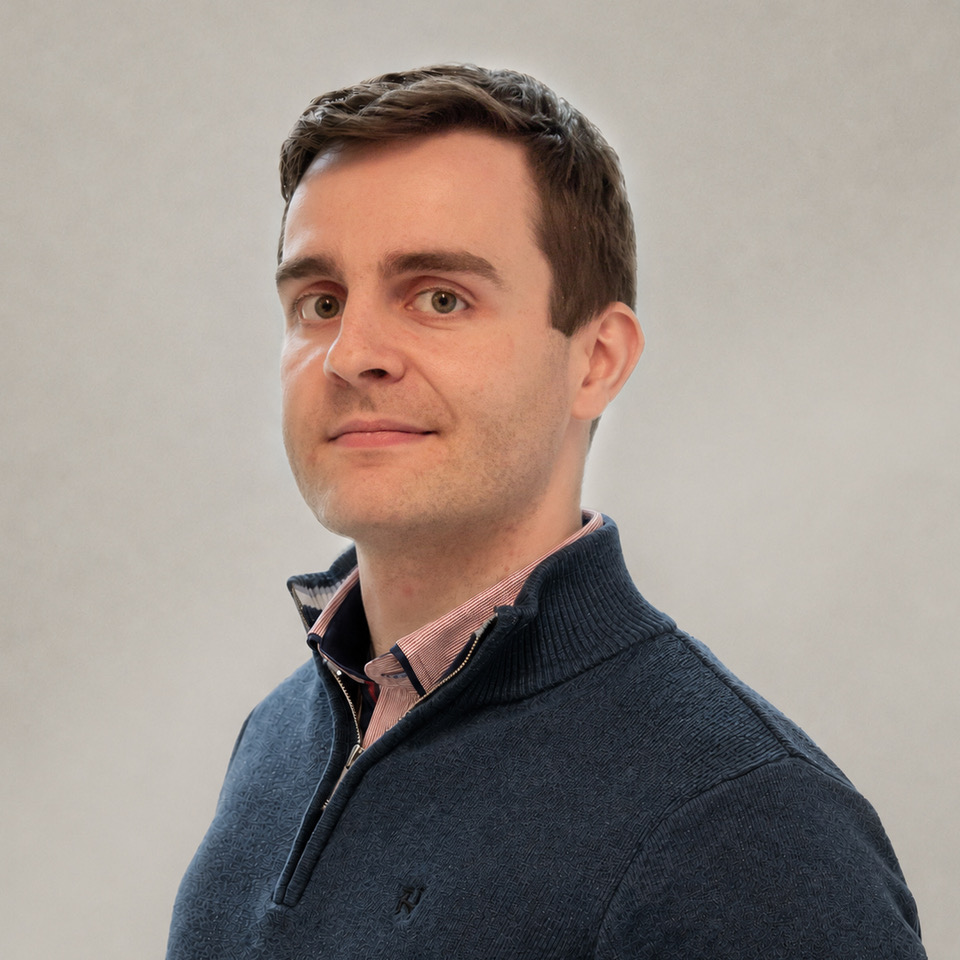
Meet Mark Lyons, Lead Scientist
2026-09-08
1. Your background combines pharmacy, translational research and hands-on drug development. What first drew you to this field, and how has that journey shaped the scientist you are today?
The broadness of the degree drew me to pharmacy. I was particularly attracted to the ability to engage with the process of developing medicines and treating disease at multiple stages. While my research experience has given me an understanding of the hands-on technical work of pre-clinical development, my pharmacy training and community-based practice have placed patients and their care at the center of my outlook. This appreciation for the “bench to bedside” journey of translational research has strongly shaped my development as a scientist.
2. What attracted you to Oncorena and its mission, and what excites you most about contributing as Lead Scientist at this stage of the company’s development?
There are two key aspects of the Oncorena journey that I find especially exciting. I see an opportunity to develop the first ever targeted treatment for renal cell carcinoma. This is made even more exciting when you consider that this would be the first chemotherapeutic developed specifically for patients on haemodialysis. Improving the standard of care for vulnerable, underserved patients is a motivation for all healthcare professionals, and this appeals to me as a pharmacist. As a drug development scientist, I am most excited by ONC175 itself. Since Paul Ehrlich defined the “magic bullet” in the early 1900’s, the holy grail of chemotherapy has been to develop treatments that can kill cancer cells while leaving healthy tissue intact. ONC175 displays remarkable tissue selectivity, with no signs of lasting damage outside of renal cells. This represents a major advantage over the majority of cytotoxic cancer drugs, and an exciting platform for the development of a novel, targeted chemotherapeutic.
3. Your doctoral research focused on developing a targeted therapeutic approach for renal cell carcinoma. Which insights or capabilities from that work are proving most valuable in your role at Oncorena?
The study of orellanine, the molecule behind the ONC175 treatment, represents a relatively small field. Over the course of my doctoral research I had the opportunity to read (nearly) every paper that has been written on orellanine, from natural origins to modern syntheses. This has given me a keen understanding of what is currently known, and what remains to be discovered, allowing me to provide value in both clinical and pre-clinical discussions here at Oncorena.
4. For readers outside the laboratory, what does your work as Lead Scientist involve, and what are the key scientific questions your team is working to answer as Oncorena advances its development programme?
The inherent selectivity of the orellanine platform is exceptional and presents several exciting questions and opportunities. However, one of the most important challenges for a small drug development company is to stay focused on their mission, and obligation to the patients. As Lead Scientist, I coordinate with our clinical team to decide which pre-clinical experiments and studies need to be prioritized in order to bring ONC175 to patients as soon as we safely can.
5. You have experience spanning organic synthesis, analytical methods and biological models, as well as direct patient care as a pharmacist. How does that breadth influence the way you approach translational research and keep patient needs in focus?
Keeping a broad view of the drug development process has been the guiding principle of my career development to date. Translational research requires deep expertise in multiple fields, but it was important to me that I understood how these different parts work together to produce healthcare benefit. In this way, drug development can be viewed not as a process with customers at the end, but as a vehicle with patients at the centre, designed to carry underserved cohorts to better outcomes.
6. On a more personal note, what motivates you in your work, and how do you recharge and find inspiration outside the laboratory?
One of the advantages of being a pharmacist is the flexibility; I get to work in my local pharmacy back home once or twice a month. This keeps my clinical skills up to date, but it also provides an outlet from my work at Oncorena. When you are working on this sort of medium term project, success and results are something that you spend more time chasing than enjoying. Working as a pharmacist gives me the chance to apply my problem solving skills to help patients more directly, while also getting to be part of the local community.
Latest news
2022-09-29
Oncorena expands its management team and stre…
Oncorena AB, which is developing a new and potentially groundbreaking treatment for patients with advanced…
Read more2022-06-20
Börje Haraldsson appointed CEO of Oncorena AB
Oncorena AB, which is developing a new and potentially groundbreaking treatment for patients with advanced…
Read more2022-06-01
Börje Haraldsson – CEO at Oncorena
In 2011, the pharmaceutical company Oncorena was founded with the mission to develop a breakthrough treatm…
Read more