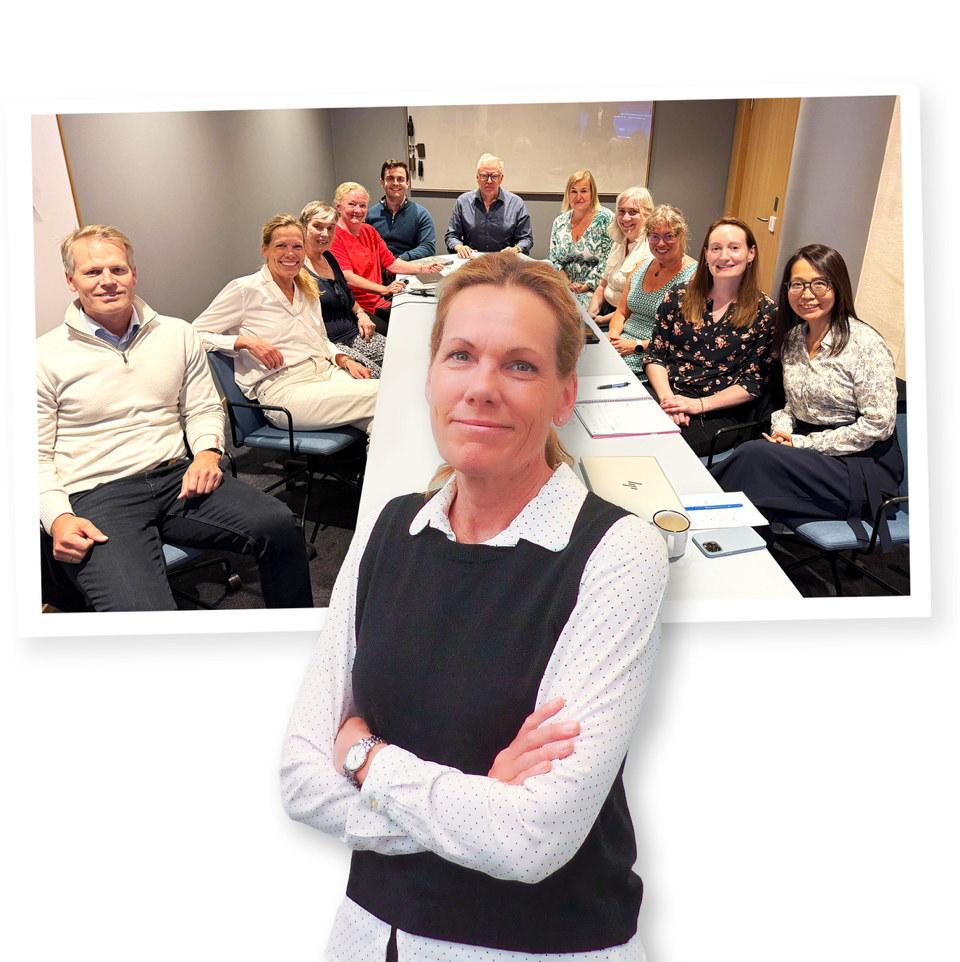
Meet Susanna Dahlgren, PhD, PMP
2026-09-23
Chief Operating Officer, Oncorena
1. You have more than 20 years of experience across drug discovery, clinical development, medical affairs and biotech operations. What attracted you to Oncorena, and what excites you most about your role as Chief Operating Officer at this stage of the company's development?
There were two things in particular that attracted me to Oncorena: the people behind the company and the opportunity to contribute to the development of a new treatment for seriously ill cancer patients with very limited treatment options.
I genuinely believed in the scientific concept behind the project. Having worked in drug discovery and development for many years, I have seen numerous promising projects fail, often because biology is more complex than we anticipate and the body finds ways to compensate for the mechanisms we are trying to influence. What makes Oncorena particularly interesting to me is that our drug candidate originates from nature and has demonstrated a high degree of kidney specificity. To me, that provides a compelling biological rationale and a strong reason to believe in the concept.
Having previously worked in larger pharmaceutical organisations, I also find it extremely motivating to be part of a small company where experience can be applied very directly and where each individual can make a real difference at such a critical stage of development.
2. Your career has taken you from early discovery through clinical development and launch-related activities. What have been the most important lessons you have learned about turning promising science into a development program that can ultimately benefit patients?
One of the most important lessons I have learned is that you can never collaborate too much. Successful drug development requires close collaboration across functions, organisations and areas of expertise.
Working in silos means that you will never realise the full potential of a project. Early discovery teams need to understand future regulatory requirements as well as the broader clinical and commercial context. Clinical development needs to consider the needs of the physicians and patients who will ultimately use the treatment, as well as those responsible for assessing and funding it.
This is also why broad experience is so valuable in drug development leadership. You need to understand what lies ahead, anticipate future requirements and ensure that decisions made today support the next stage of development.
3. As COO, you are responsible for translating Oncorena's development strategy into execution across a lean organisation and a network of highly specialised external partners. What does it take to create alignment, maintain quality and keep a complex drug development program moving forward?
It requires a great deal of planning—and continuous re-planning—because drug development is a constantly evolving process. Risk management is also essential. It may not sound particularly exciting, but identifying risks early and managing them proactively is fundamental to successful execution.
And once again, collaboration is critical. I have broad experience across drug development, but the individual experts are the specialists in their respective fields, and maintaining an open and continuous dialogue with them is essential. A large part of my role is about creating the right conditions for these experts to perform at their best and removing obstacles that may stand in their way.
One thing I have learned over the years is to ask questions whenever I sense a lack of alignment within a team. Different perspectives and interpretations are part of human nature and are often a major strength in a project. But if they are not identified and discussed, they can just as easily lead a project off course.
4. You have extensive experience leading cross-functional and international teams. In your view, what characterises a high-performing biotech team, particularly when the science is novel and the path forward requires both discipline and flexibility?
Strong and relevant expertise is fundamental, but so is curiosity. Equally important is trust.
When there is trust within a team, people feel comfortable expressing different opinions, asking difficult questions and constructively challenging one another. That is essential in innovative drug development, where the answers are rarely obvious.
Creating that kind of environment requires an organization in which people feel safe, respected and encouraged to contribute their perspectives. This is something we take very seriously at Oncorena.
Finally, a high-performing team needs strong alignment around the overall mission and the most critical priorities. When everyone understands what we are trying to achieve and why, it becomes much easier to remain both disciplined and flexible in how we get there.
5. Oncorena is advancing a first-in-class treatment concept for metastatic renal cancer. From an operational and development perspective, what do you see as the most important opportunities and priorities for the company as the program progresses?
We have a data-driven development strategy with the ambition of pursuing an accelerated regulatory pathway. This means we need to remain highly flexible and be prepared to act on opportunities as new data emerges.
An important priority is therefore to fully explore different clinical and regulatory approaches while continuing to deepen our understanding of the disease in this specific rare patient population and of the underlying mechanisms of ONC175.
At the same time, we need to explore the broader potential of the treatment without losing focus on our current development programme.
From an organizational perspective, we also need to continue developing Oncorena as a company, ensuring that our capabilities, resources and ways of working evolve in line with the increasing demands of the development programme.
6. As Oncorena prepares for its next stage of development, potentially including a future IPO, what experience and capabilities do you bring to help build the organization, processes and operational discipline required to take the company to the next level?
My experience of risk- and opportunity-based management is very much aligned with how we want to develop Oncorena. It provides a structured way of anticipating what will be required and helps ensure that we put the right resources, capabilities and processes in place at the right time.
In a growing biotech company, it is important to remain pragmatic and avoid introducing complexity before it is needed, while at the same time being proactive enough to prepare for the next stage.
Having worked across drug development from bench to bedside is a significant advantage in this respect. It allows me to understand how decisions and activities at one stage influence what will be required later and to help build the organization accordingly.
7. On a more personal note, what motivates you in your work, and what continues to inspire you after more than two decades in life science and drug development?
Curiosity has always been one of my strongest drivers, and it is probably one of the reasons I became a scientist in the first place.
What I enjoy about this work is that I continue to learn something new almost every day. I have the opportunity to be involved in many different aspects of drug development and to work alongside highly skilled and committed people.
Ultimately, however, the strongest motivation is the possibility that what we are doing may contribute to better treatment options and better lives for seriously ill patients. That gives our work a very clear purpose—and it is something I believe everyone at Oncorena feels strongly about.
Latest news
2020-06-15
Announcement Chief Business Officer (CBO) Pål…
It is with great pleasure to welcome Pål Falck as a CBO for Oncorena, starting September 1, 2020. Pål brin…
Read more2018-11-22
Oncorena raises SEK 14.5 million to prepare f…
Oncorena Holding AB today announces that the company through a share issue has raised capital to build its…
Read more2018-06-26
The Swedish oncology company Oncorena appoint…
Oncorena AB announces that a new full-time CEO has been appointed effective July 1. Lars Grundemar will le…
Read more